


Key Points
- U.S. stocks continued their upward trend in October despite uncertainty from the government shutdown and renewed trade tensions.
- Bond markets delivered modest gains as the Federal Reserve issued its second consecutive rate cut.
- Market volatility was short‑lived, reinforcing the importance of disciplined, long‑term portfolio management.
- A 2.8% Social Security COLA for 2026 offers only limited support for retirees facing rising healthcare and living costs.
- With interest rates declining and inflation moderating, diversified portfolios remain the most effective way to pursue risk‑adjusted returns.

When markets get volatile, clarity matters.
Download our educational guide, How to Protect Your Wealth in Challenging Markets.
Markets Advanced Despite Government Headlines
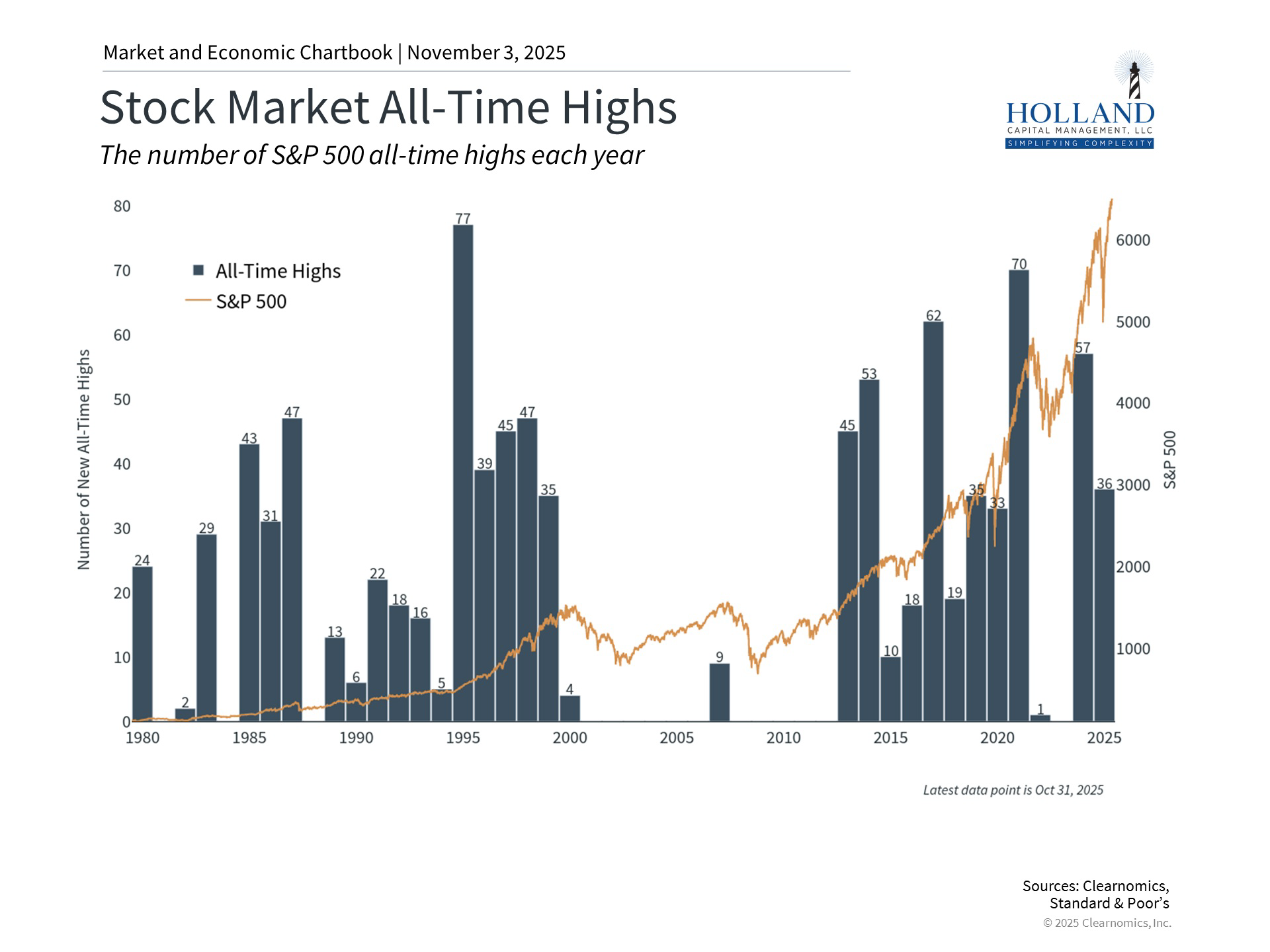
October’s market performance once again demonstrated how quickly headlines can create emotional uncertainty without changing long‑term fundamentals. Equity markets opened the month amid volatility tied to the ongoing federal government shutdown, which entered record‑length territory as lawmakers failed to reach a spending deal. Yet, just as in prior shutdown periods, markets ultimately looked through the disruption and resumed their upward trend.
The S&P 500 gained 2.3% during October, while the Dow Jones Industrial Average rose 2.5% and the Nasdaq advanced 4.7%. Year‑to‑date, the S&P 500 is up more than 16 percent, driven mainly by stable corporate earnings and improving monetary conditions. This resiliency reinforces why maintaining a long‑term perspective is more valuable than reacting to political cycles.
Trade Tensions Created Only Temporary Volatility
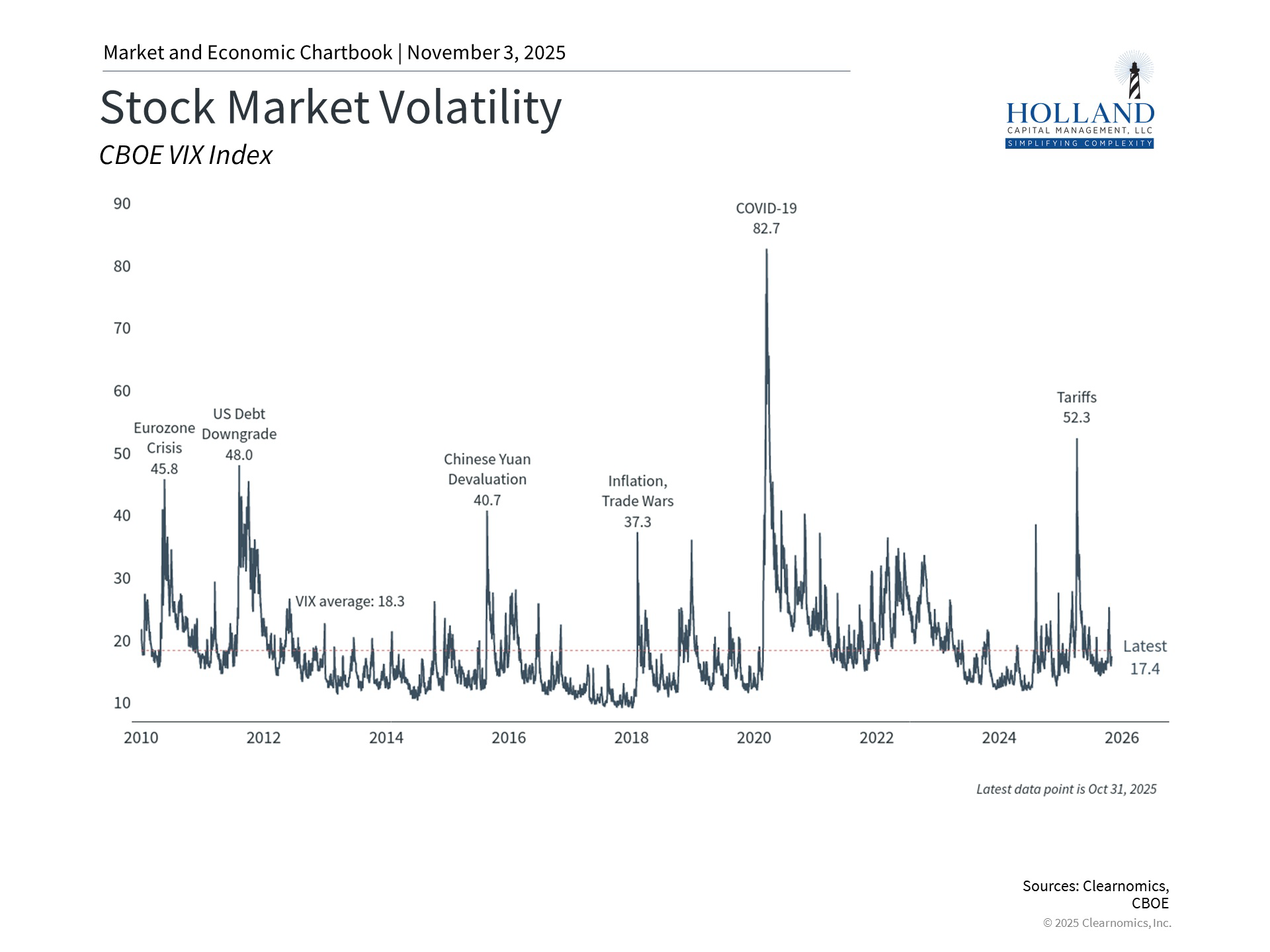
Mid‑month volatility surfaced after a sharp sell‑off tied to renewed trade tensions between the U.S. and China. Concerns centered on rare earth metals, a supply chain component in which China holds the vast majority of global production capacity. The prospect of sudden 100% tariffs triggered the most significant single‑day equity decline since April.
However, markets recovered quickly once negotiations signaled a de‑escalation. Presidents Trump and Xi met during the final week of the month, leading to tariff reductions and a renewed diplomatic tone. While geopolitical flare‑ups can create short‑term selling pressure, history shows that markets tend to stabilize once investors refocus on earnings, growth trends, and monetary policy rather than headlines.
The Fed Continues Its Easing Cycle
The Federal Reserve cut interest rates by 0.25 percent at its October meeting, lowering the federal funds rate to a range of 3.75 to 4.00 percent. This marked the second consecutive cut as policymakers continued shifting toward a more accommodative stance in response to moderating inflation and softer labor data.
Futures markets now expect an additional rate cut by early 2026, while the Fed also announced the end of its multi-year balance sheet reduction program. While lower rates reduce income from cash holdings, they also support risk assets and lower borrowing costs for businesses and households.
Social Security COLA Highlights Retirement Planning Challenges
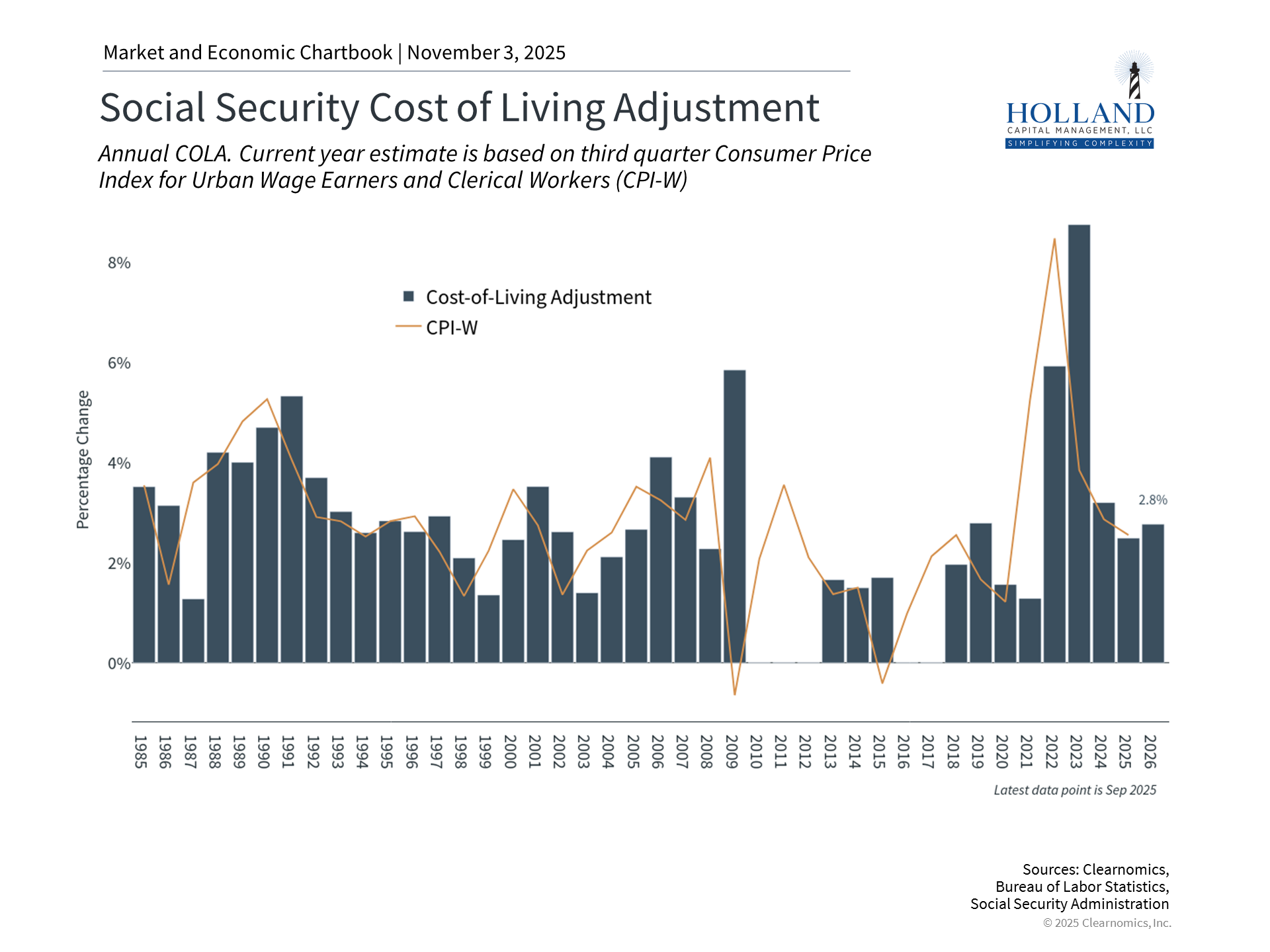
The Social Security Administration announced a 2.8 percent cost‑of‑living adjustment (COLA) for 2026, raising the average monthly benefit to approximately $2,064. Although helpful, this increase is modest compared to the 8.7 percent adjustment in 2023 and does not fully reflect the rising costs retirees face.
Healthcare services rose 3.9 percent over the past year, while home insurance climbed 7.5 percent. Medicare Part B premiums are projected to increase by more than one‑third of the average COLA benefit, reducing real household purchasing power. This trend underscores the importance of combining Social Security with a well‑structured portfolio that supports sustainable retirement income.
See how our approach to retirement planning helps retirees create flexible income strategies while accounting for inflation and longevity.
Why Diversification Still Matters
Despite substantial year‑to‑date gains, markets continue to experience brief periods of volatility as economic data, policy decisions, and global events shift investor sentiment. A diversified allocation across stocks, bonds, and alternative assets remains essential for long‑term investors—particularly as interest rates decline and future returns normalize.
Thoughtful investment management focuses on balancing risk, tax impact, and income needs, rather than predicting short‑term market movements. Portfolios anchored to an evidence‑based process are better positioned to compound through both market expansions and temporary pullbacks.
Staying Grounded in the Plan
October’s performance reinforced a familiar lesson: markets often climb a wall of worry. Whether the concern is a shutdown, tariffs, or policy uncertainty, disciplined investing continues to reward long‑term participants. A thoughtful plan—supported by objective advice, diversified allocations, and ongoing monitoring—helps keep investors focused on progress rather than noise.
Getting Started with Holland Capital Management
If you’re evaluating financial decisions in today’s market environment, request a Clarity Call to discuss our planning and investment approach.
Frequently Asked Questions
What happened to the crypto market in October?
In October 2025, the crypto market experienced significant volatility, driven by regulatory changes and macroeconomic factors. Major cryptocurrencies saw fluctuations in value, while emerging tokens gained traction. Investors should stay informed about these developments to make strategic decisions in this dynamic landscape highlighted in the October 2025 market update.
How did the stock market perform in October?
U.S. equity indices posted positive returns, with the S&P 500 gaining 2.3 percent and the Nasdaq rising 4.7 percent. Market strength was broad‑based despite early‑month volatility.
Did the government shutdown affect the economy?
Although disruptive for federal workers, the shutdown did not materially impact markets. Historically, shutdowns have had little long‑term economic effect because spending is postponed rather than eliminated.
How does the latest Fed rate cut affect investors?
Lower interest rates generally support stocks and bonds but reduce yields on cash. Investors relying heavily on money markets may see lower income in 2026.
Is the 2026 Social Security COLA enough to offset inflation?
At 2.8 percent, the adjustment helps, but it may not keep pace with healthcare and insurance costs, which continue to rise faster than CPI.
What is the best way to manage volatility right now?
Maintaining a globally diversified portfolio, avoiding emotional reactions to headlines, and aligning allocations with long‑term goals remain the most effective strategies.
