


Key Takeaways
- Markets experienced a modest pullback in Q1, consistent with normal volatility patterns
- Rising oil prices and geopolitical tensions were the primary drivers of short-term uncertainty
- The economy is slowing but remains stable, with continued consumer resilience
- Sector leadership has shifted, reinforcing the importance of diversification
- Long-term investors benefit from staying disciplined and aligned with financial goals
Market Snapshot (Q1 2026)
- S&P 500: -4.3%
- Nasdaq: -5.8%
- Dow Jones: -2.9%
- U.S. Aggregate Bonds: +1.2%
- International Equities (MSCI EAFE): -1.7%
- Brent Crude Oil: ~$118 per barrel
- U.S. 10-Year Treasury Yield: ~4.4%
- Gold: Near all-time highs
The first quarter of 2026 was a reminder that market volatility often returns when investors least expect it. After a strong 2025, markets faced rising geopolitical risk, higher oil prices, and renewed questions about economic growth. While these developments may feel disruptive, they are not unusual within the broader context of long-term investing.
From a portfolio perspective, this environment highlights how quickly leadership can shift beneath the surface. While headline indices declined modestly, other areas of the market performed well, particularly energy and defensive sectors. This reinforces the importance of maintaining a disciplined approach to investment management, rather than reacting to short-term headlines.
Market Performance Reflects Shifting Leadership
Market performance in the first quarter was more nuanced than headline index returns suggest. While broad U.S. equity indices declined modestly, performance across asset classes and regions varied significantly.
U.S. large-cap stocks experienced a pullback, while international equities were more mixed. Fixed income provided modest positive returns, offering diversification benefits during equity volatility. At the same time, commodities, particularly energy, were among the strongest-performing areas of the market.
This divergence highlights an important point: markets are rarely moving in a single direction across all segments. Instead, leadership rotates based on economic conditions, interest rates, and external shocks such as geopolitical events.
For investors, this reinforces the importance of maintaining exposure across asset classes rather than concentrating portfolios in a narrow set of winners.
Market Pullbacks Are a Normal Part of Investing
Market pullbacks are a normal part of long-term investing and not a signal that a plan is failing. In Q1 2026, the S&P 500 declined 4.3%, which fits well within historical norms for intra-year volatility.
Since 1980, markets have experienced average intra-year drawdowns of approximately 14% to 15%, even in years that ultimately finish with positive returns. In fact, it is common to see multiple pullbacks of 5% or more within a single year. These movements are part of how markets function, not an indication that something is fundamentally broken.
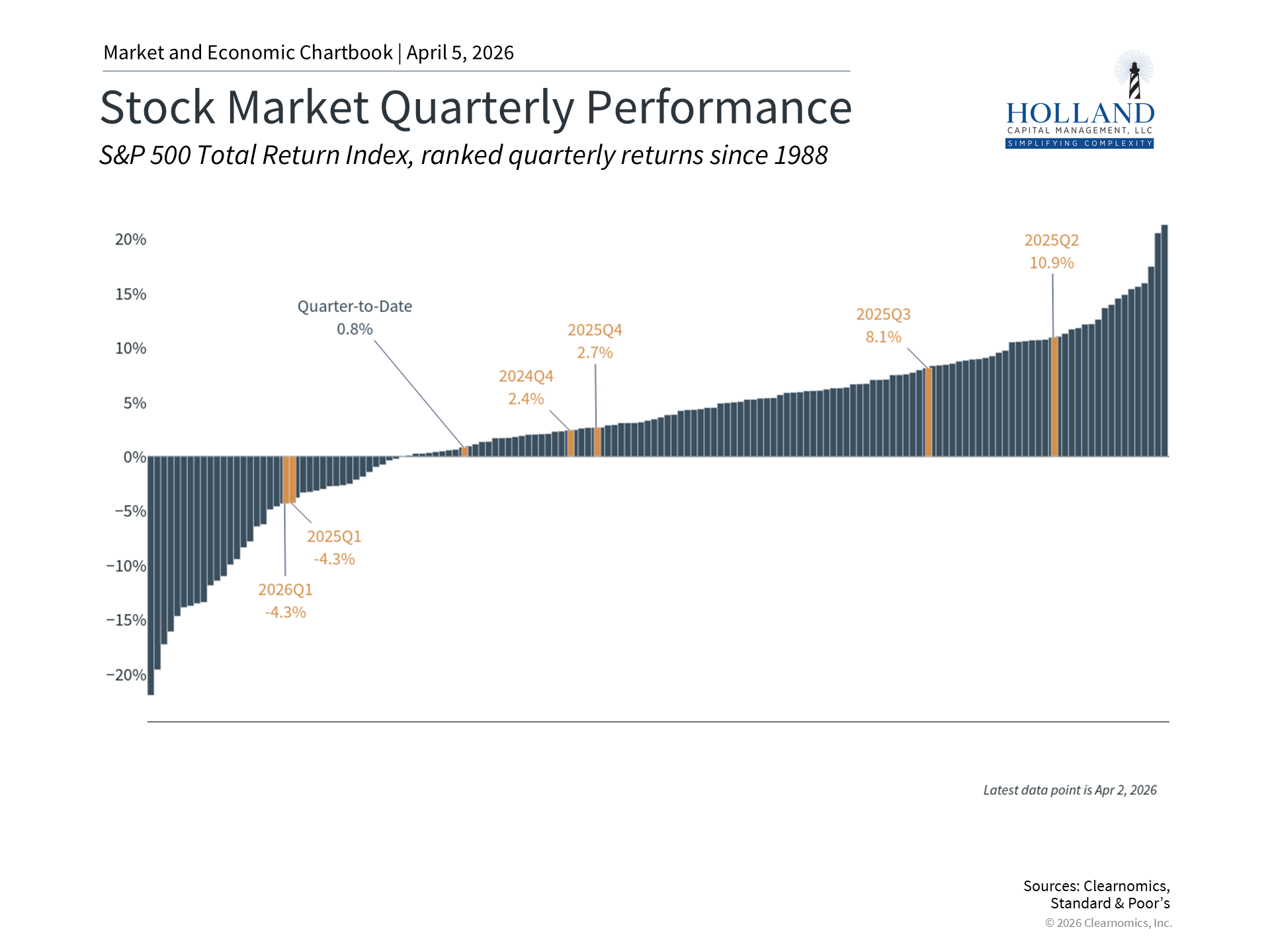
Another helpful comparison is the start of 2025, which also experienced early-year volatility before markets went on to deliver strong gains later in the year. While history does not repeat perfectly, it often provides useful context when evaluating current conditions.
Periods like this reinforce the importance of risk management and asset allocation as part of a disciplined investment management strategy. Rather than attempting to time short-term movements, investors are typically better served by staying aligned with a well-constructed portfolio designed for a range of outcomes.
Oil Prices and Geopolitical Risk Are Driving Short-Term Volatility
Rising oil prices and geopolitical conflict were central drivers of market uncertainty during the first quarter. Brent crude reached approximately $118 per barrel, while WTI crude moved above $100, reflecting significant supply concerns.
A major factor has been instability in the Middle East, particularly around key shipping routes such as the Strait of Hormuz. This region accounts for roughly 20% of global oil transit, making it one of the most critical chokepoints in the global energy system. Even the perception of disruption can lead to sharp price increases.
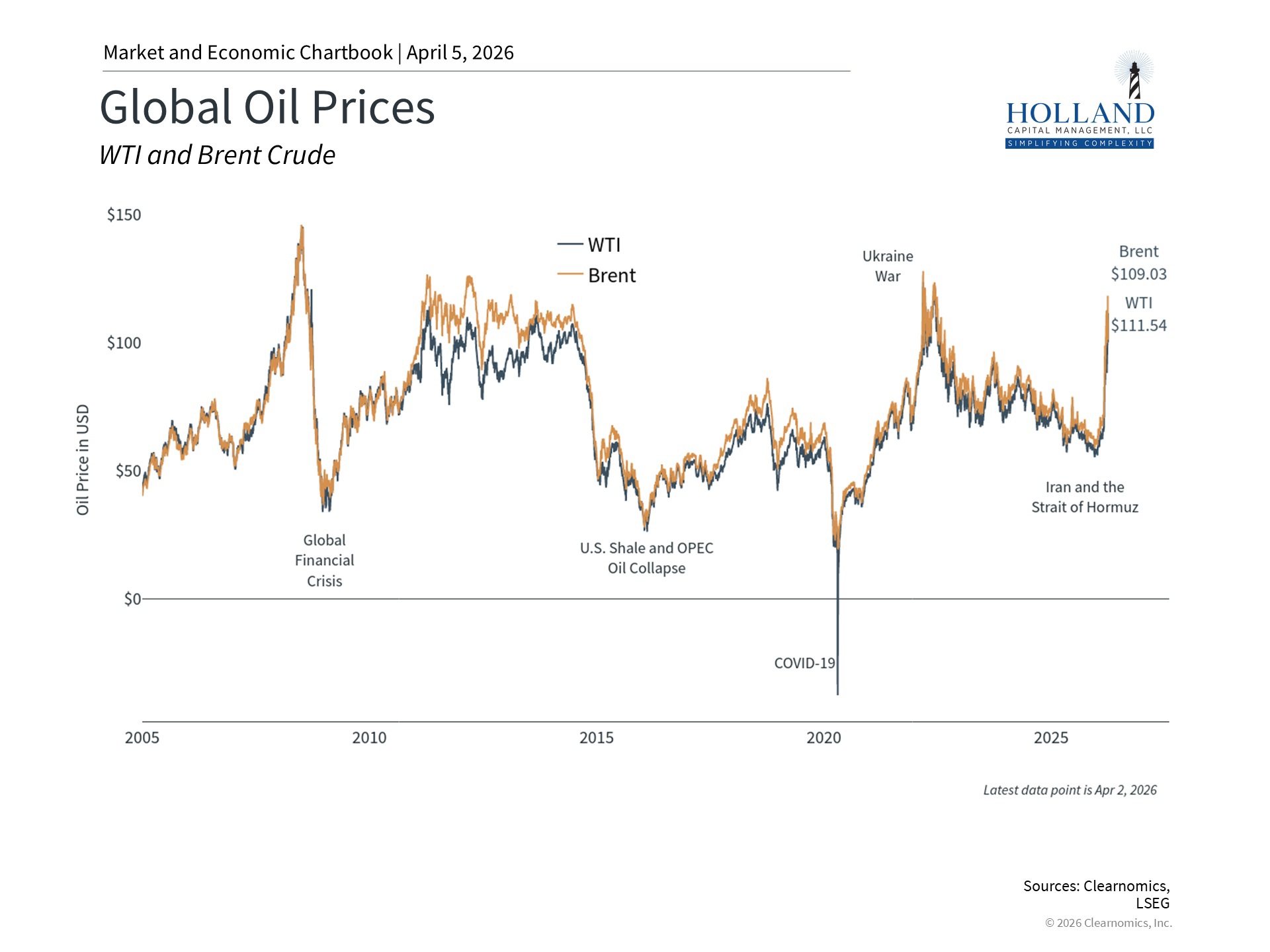
Higher energy prices affect more than just fuel costs. Gasoline prices approached $4 per gallon nationally, while diesel costs also increased, impacting transportation, logistics, and ultimately the cost of goods and services. These pressures can influence inflation and consumer sentiment.
However, history suggests that these types of supply-driven shocks are often temporary. Similar spikes in 2022 led to short-term disruption but did not alter long-term market trends. As geopolitical conditions stabilize and supply adjusts, prices tend to normalize over time.
For investors, maintaining portfolio diversification and a structured financial planning process is generally more effective than reacting to short-term headlines.
Higher Energy Prices Are Pressuring Inflation and Consumers
Beyond market volatility, rising energy prices have meaningful implications for households and businesses. Gasoline prices approaching $4 per gallon and higher diesel costs increase transportation and production expenses across the economy.
These increases can contribute to broader inflationary pressure, particularly in goods and services tied to logistics and supply chains. For consumers, higher energy costs can reduce discretionary spending, which in turn may influence overall economic growth.
While these effects can create short-term headwinds, they are typically cyclical rather than permanent. Over time, markets and supply chains adjust, helping to stabilize pricing pressures.
Understanding this relationship helps investors interpret market movements within a broader economic context rather than reacting to isolated data points.
RETIREMENT ENGINEERING™
The Order Matters
Five retirement decisions and why timing matters.
The Economy Is Slowing but Not Contracting
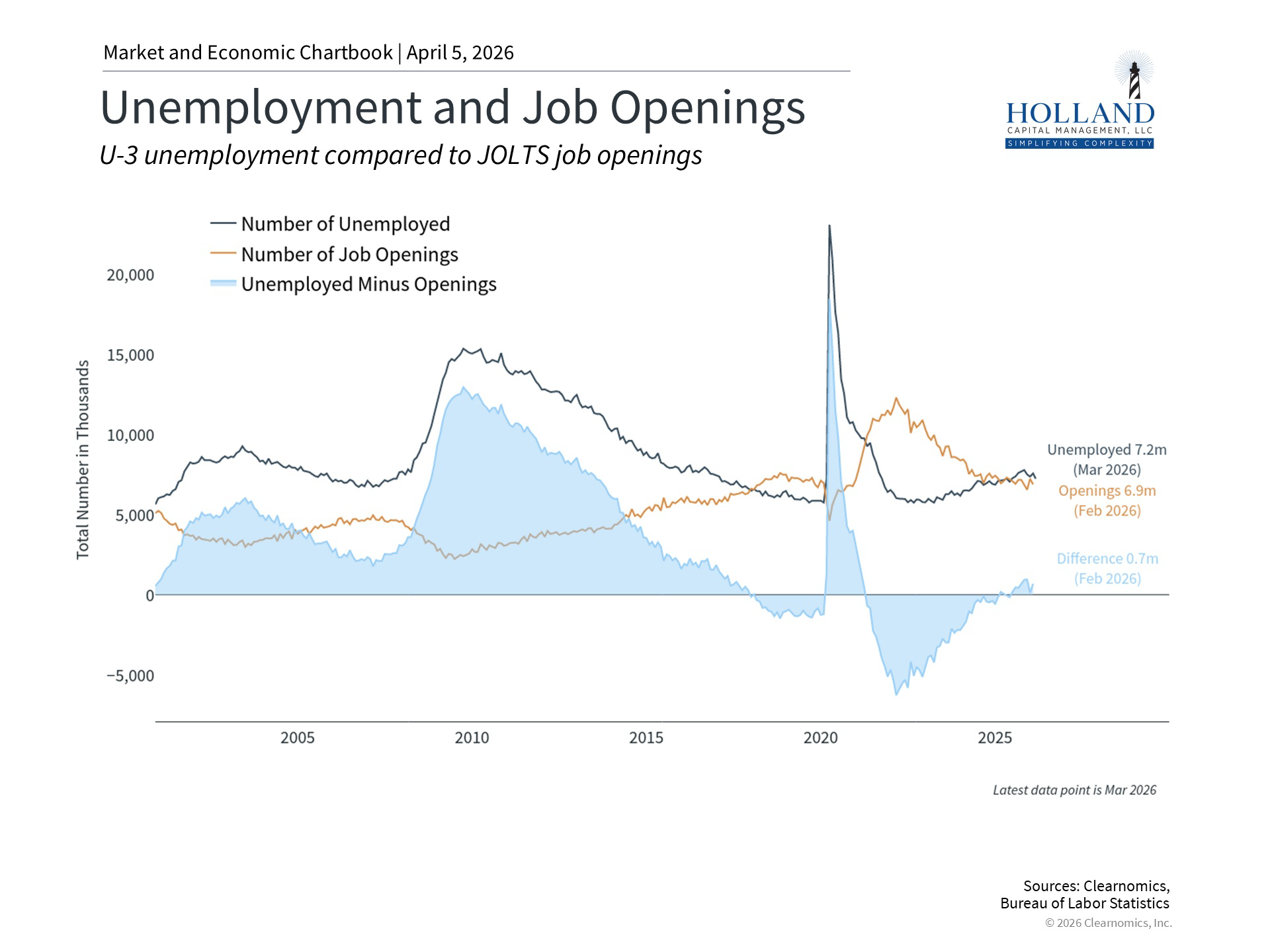
The U.S. economy is showing signs of moderation, but not deterioration. The unemployment rate has risen modestly to approximately 4.4%, and job openings have declined from previously elevated levels.
Importantly, both the supply and demand sides of the labor market are adjusting. Demographic factors such as an aging population, along with changes in immigration and workforce participation, are contributing to a more balanced environment. At the same time, hiring demand has cooled following a period of rapid expansion.
Consumer spending remains the largest driver of economic activity, accounting for roughly two-thirds of GDP. While growth has slowed, it continues to support overall economic growth, suggesting a transition toward normalization rather than an imminent recession risk.
Many households use periods like this to review long-term assumptions and align goals through a structured retirement planning process. This includes evaluating spending needs, portfolio risk, and long-term income strategies.
Sector Divergence Reinforces the Importance of Diversification
While headline indices declined, performance at the sector level varied significantly. The energy sector gained nearly 40% during the quarter, benefiting directly from higher oil prices. At the same time, defensive sectors such as consumer staples, utilities, and healthcare provided relative stability.
In contrast, technology stocks and many large-cap growth companies underperformed. This represents a shift from recent years, when a small number of technology companies drove a significant portion of market returns.
The dispersion between the best- and worst-performing sectors approached 50 percentage points, highlighting how quickly leadership can change. This level of divergence underscores the importance of diversification across sectors and asset classes.
A well-constructed portfolio is designed to navigate these shifts rather than depend on a single area of the market. This is particularly important for investors nearing retirement or relying on their portfolios for income.
Policy Uncertainty Requires Disciplined Long-Term Focus
Trade policy developments added another layer of uncertainty during the quarter. Legal challenges to existing tariff frameworks resulted in changes to how trade measures are implemented, while additional investigations remain ongoing.
While these developments can influence markets in the short term, policy uncertainty is not new. Markets have historically adapted to evolving regulatory and political environments without altering long-term return patterns.
The key for investors is to remain focused on long-term investing, maintain appropriate asset allocation, and avoid reactive decisions driven by headlines.
A comprehensive strategy should also include planning considerations, such as estate planning.
What This Means for Long-Term Investors
Periods of volatility are a normal part of investing. Long-term investors benefit most by maintaining discipline, staying diversified, and focusing on financial goals rather than reacting to short-term market movements.
Environments like this often serve as a useful reminder that portfolios are built for a range of outcomes, not a single forecast. Short-term uncertainty, whether driven by geopolitics, interest rates, or economic data, is already accounted for within a well-diversified strategy.
For long-term investors, the focus should remain on maintaining alignment between portfolio structure and financial goals. This includes periodic rebalancing, reviewing risk exposure, and ensuring that investment decisions continue to support broader planning objectives.
Rather than attempting to predict short-term market direction, a disciplined approach centered on consistency and long-term thinking has historically produced more reliable outcomes.
Frequently Asked Questions
What caused the market pullback in Q1 2026?
The Q1 2026 market pullback was caused by geopolitical conflict, rising oil prices, and shifting economic expectations. These factors increased uncertainty but remain consistent with normal market volatility patterns seen in long-term investing.
Why do oil prices affect investment portfolios?
Oil prices affect investment portfolios because they influence inflation, business costs, and consumer spending. Rising energy prices can benefit the energy sector while putting pressure on other industries, reinforcing the importance of diversification.
Does a slowing economy signal a recession?
A slowing economy does not automatically signal a recession. Current conditions reflect normalization, with labor markets cooling and growth moderating without widespread economic contraction.
How should investors respond to market volatility?
Investors should respond to market volatility by maintaining a disciplined investment strategy, staying diversified, and avoiding reactive decisions. Long-term financial plans are designed to account for short-term fluctuations and support consistent outcomes,

