


Key Points
- Excess cash can quietly erode long-term purchasing power when inflation exceeds short-term yields.
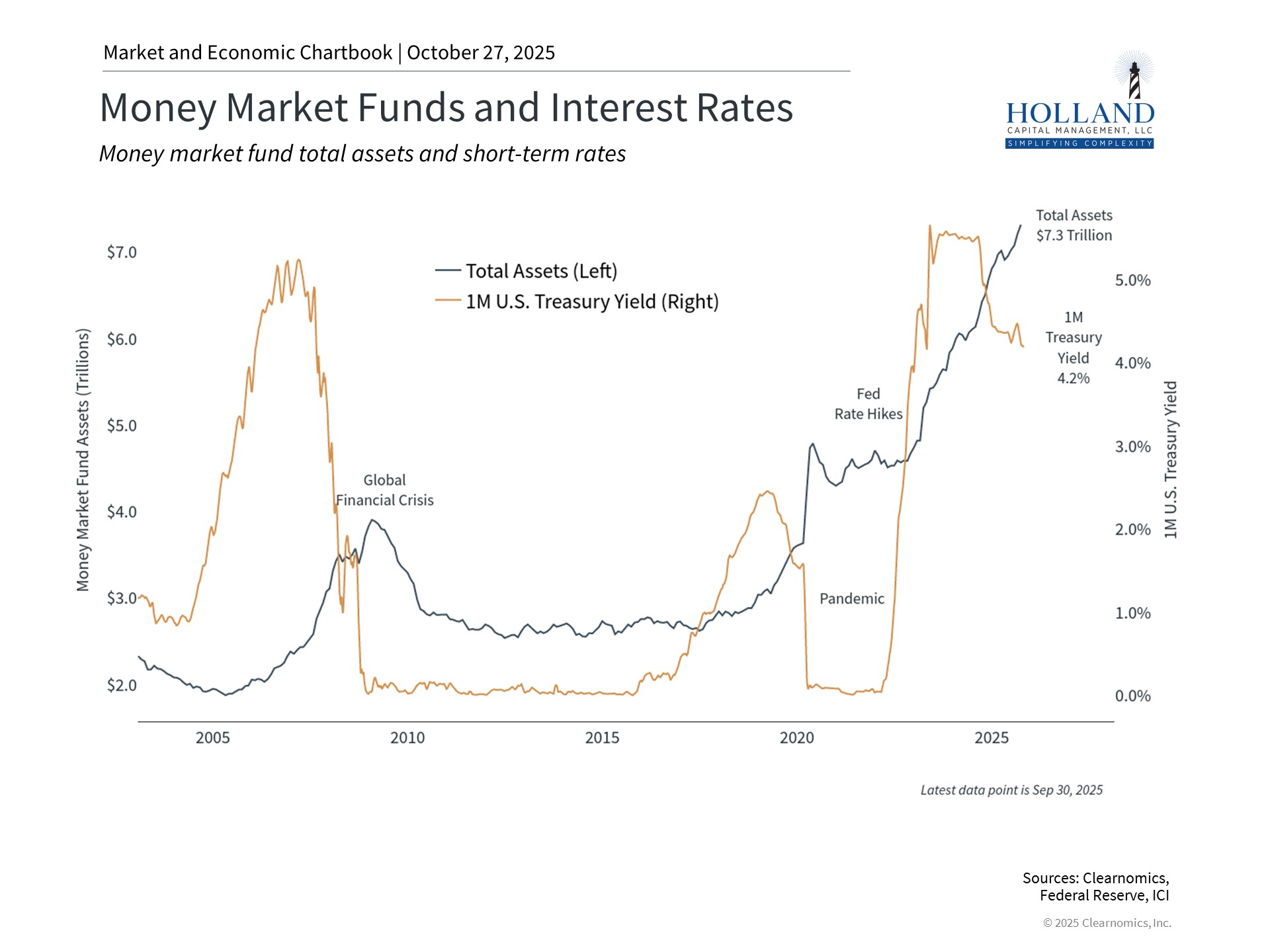
- The surge in money market balances reflects investor caution rather than sustainable income generation.
- Historically, equities and bonds have outperformed cash by a wide margin.
- A strategic allocation process helps determine how much liquidity to hold for spending needs versus growth.
- Working with a fiduciary advisor ensures that cash management decisions align with your broader financial plan and tax strategy.

When markets get volatile, clarity matters.
Download our educational guide, How to Protect Your Wealth in Challenging Markets.
When “Safety” Starts to Cost Investors
Holding large cash balances often feels safe—especially after years of market volatility and rising interest rates. Yet the same factors that boosted money market yields can reverse quickly when the Federal Reserve begins cutting rates.
While cash is essential for near-term expenses and stability, it’s not an engine for long-term growth. Inflation quietly eats away at real market value, meaning the dollars you hold today may buy less in the future. A structured cash management plan helps balance flexibility with productivity, keeping your assets working while maintaining liquidity.
The Long-Term Trade-Off Between Cash and Growth
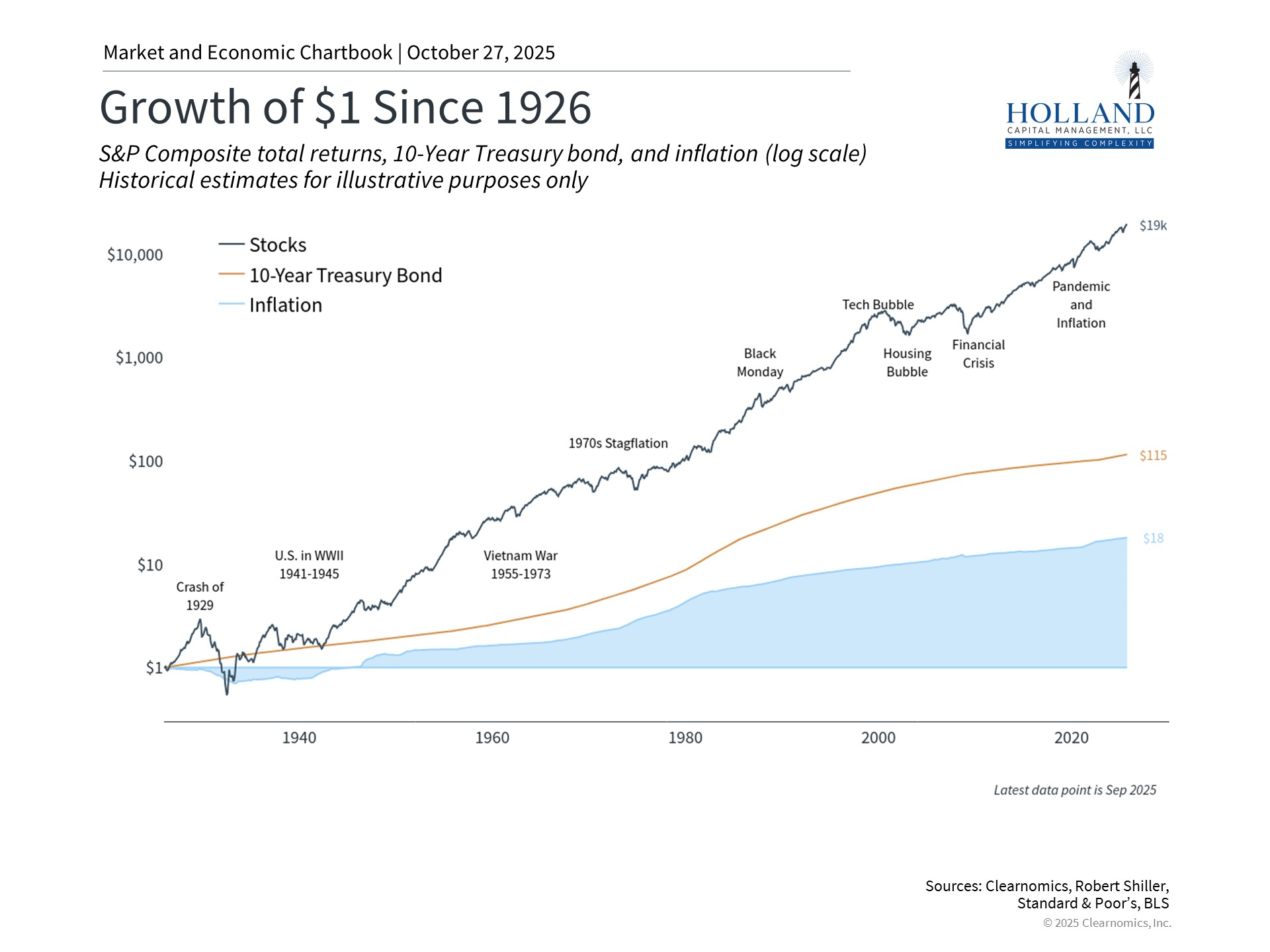
Since 1926, U.S. stocks and bonds have generated substantial real returns, while cash barely kept up with inflation. Over short periods, cash can offer comfort, but over the long term, it tends to lag dramatically.
At Holland Capital Management, we help clients evaluate how much cash is genuinely needed for safety versus how much could be more productive elsewhere. Through integrated investment management and planning, we model liquidity tiers to ensure each dollar serves a clear purpose.
The Hidden Cost of Holding Too Much Cash
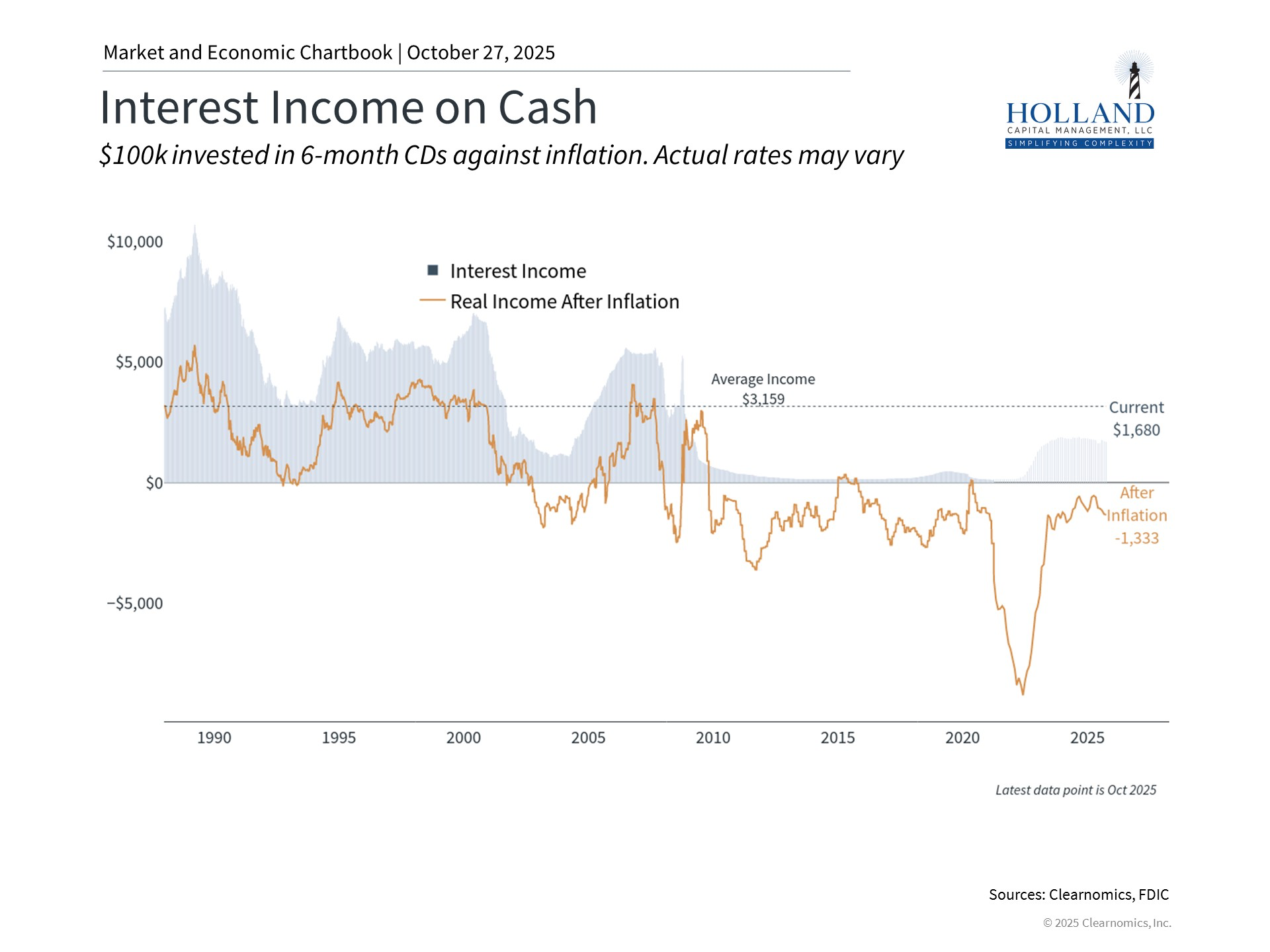
Money market funds currently yield attractive rates, but those returns are temporary. When the Fed lowers rates, reinvestment risk becomes a significant concern. Investors who remain heavily in cash could see income fall while inflation persists.
The goal is not to eliminate cash but to deploy it intentionally, balancing short-term needs, tax efficiency, and growth. This is where planning and discipline matter most.
Integrating Cash Decisions Into Your Financial Plan
Proper optimization comes from coordinating cash with investment and tax strategies. For retirees, excess cash flow can fund income distributions or serve as a buffer for withdrawals during market volatility. For accumulators, it can be a launchpad for new opportunities when markets stabilize.
Our retirement planning process and tax-efficient investing framework ensure each liquidity decision is supported by data—not guesswork. That integration is what distinguishes a fiduciary, planning-led approach.
Re-Deploying Excess Cash Without Losing Sleep
Reallocating idle cash doesn’t have to mean taking unnecessary risk. The process begins with an objective conversation about time horizons, income needs, and comfort level.
At Holland Capital Management, we focus on building resilient portfolios—anchored by your goals, not by short-term headlines. Learn more about why we’re different and how our fiduciary approach can help you invest excess cash strategically and confidently.
Getting Started with Holland Capital Management
If you’re evaluating financial decisions in today’s market environment, request a Clarity Call to discuss our planning and investment approach.
Frequently Asked Questions
What is the rule of thumb for excess cash?
A common rule of thumb for managing excess cash and cash equivalents is to maintain a balance between liquidity and investment. Typically, it’s advised to keep three to six months’ worth of operating expenses in cash reserves, while investing any surplus in higher-yield assets, such as stocks or bonds, to hedge against market risk and support long-term growth.
How much cash should I keep on hand?
Most households benefit from three to six months of living expenses in reserve, but higher balances may be appropriate for near-term purchases or transitions.
What are the risks of keeping too much cash?
Inflation and falling yields can erode purchasing power and reduce long-term return potential.
Is it safe to invest excess cash in bond funds?
Short-duration, high-quality bond funds can offer stability and modest yield, but should align with your liquidity timeline.
How do taxes impact cash returns?
Interest income is taxed at ordinary rates. Strategic asset location can help improve after-tax efficiency.
How does HCM help clients manage cash?
We build tiered liquidity frameworks that ensure cash serves distinct purposes across emergency reserves, spending needs, and long-term growth.
