


Key Takeaways
- Social Security is facing long-term funding shortfalls that may require legislative changes.
- Delaying benefits can result in significantly higher lifetime payouts, particularly for high earners and married couples.
- Taxation of benefits and interaction with other income streams complicate withdrawal timing and sequencing.
- Policy reforms may include benefit reductions, tax cap increases, or raising the full retirement age.
- A diversified retirement strategy should account for the possibility of reduced Social Security income.
Introduction
Few government programs have had as profound an impact on American financial security as the Social Security and disability insurance program. Since its inception in the 1930s, it has become a pillar of retirement income for millions of Americans. However, in today’s environment of shifting demographics, persistent deficits, and political gridlock, questions about the program’s long-term solvency loom large.
Should younger generations expect to receive full benefits? Should pre-retirees alter their plans based on future policy shifts? Whether you are nearing retirement or still in the early stages of your career, understanding how Social Security integrates with a broader retirement strategy is crucial to achieving long-term goals. This article examines the program’s origins, its structural vulnerabilities, and the innovative strategies investors can employ to protect and optimize their retirement outcomes.

When markets get volatile, clarity matters.
Download our educational guide, How to Protect Your Wealth in Challenging Markets.
A Foundation, not a Fallback
Social Security is one of the most visible pieces of the retirement landscape, but it is also one of the most misunderstood. The key is to build flexibility into your plan while staying informed about the system’s limitations.
Hindsight and Headwinds: How We Got Here
A Brief History of Social Security and Its Structural Challenges
The Social Security Act was signed into law in 1935 by President Franklin D. Roosevelt in response to the economic devastation of the Great Depression. At the time, older people faced widespread poverty and had few formal sources of retirement income. Social Security was introduced as a social insurance program, designed to provide a modest but reliable source of income to retirees and specific other qualifying individuals.
In its earliest form, benefits were small and eligibility was limited. However, over the decades, the program expanded to include spousal and survivor benefits, disability income, and cost-of-living adjustments (COLAs). Today, Social Security impacts the lives of nearly every American, serving as a primary or secondary source of income for over 65 million beneficiaries.
Systemic Challenges
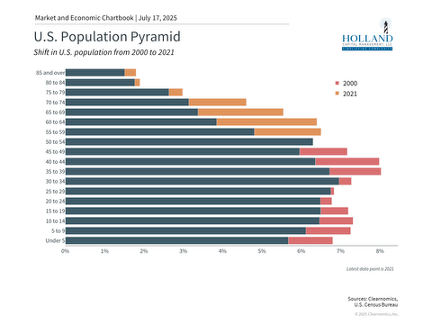
Despite its central role, Social Security’s pay-as-you-go funding structure creates inherent vulnerabilities. Unlike a traditional pension, Social Security benefits are not backed by pre-funded assets. Instead, payroll taxes collected from current workers are used to fund benefits for current retirees. In the post-World War II era, this structure was sustainable due to a high ratio of workers to retirees. In 1960, there were 5.1 workers for every retiree. Today, that figure is below three and trending downward.
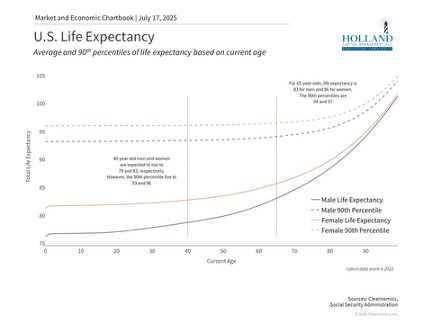
This imbalance, driven by longer life expectancy and lower birth rates, has led to concerns about the program’s long-term solvency. Projections from the Social Security Trustees estimate that, without reform, the trust funds will be depleted by 2034, after which only about 78% of scheduled benefits could be paid from ongoing payroll taxes.
Global Perspectives and Policy Possibilities
Other developed nations facing similar demographic shifts have implemented various solutions to bolster the sustainability of their retirement systems. For example, the United Kingdom and France have gradually increased their state pension ages in response to rising life expectancies. Germany has implemented a phased increase in its retirement age to 67, while Australia employs a means-tested public pension alongside mandatory private superannuation savings.
In the U.S., potential policy responses include raising the full retirement age (FRA), increasing or eliminating the cap on taxable wages (currently $168,600 in 2024), adjusting the benefit formula for high earners, and implementing partial means testing. Each proposal presents trade-offs between fiscal sustainability and political feasibility. Raising the FRA, for instance, would reduce long-term liabilities but could disproportionately affect lower-income workers who rely more heavily on Social Security. Eliminating the wage cap would boost revenues, but could face resistance from higher earners and confident policymakers.
Strategic Considerations for High-Income Retirees
Timing and Delaying Benefits
One of the most significant decisions retirees face is when to start claiming Social Security retirement benefits. While eligibility begins at age 62, doing so results in a permanent reduction in monthly benefits, up to 30% less than what you’d receive by waiting until full retirement age (FRA), which ranges from 66 to 67 depending on birth year. Conversely, delaying social security retirement benefits beyond FRA increases monthly payments by roughly 8% per year until age 70, thanks to delayed retirement credits. This can significantly increase total lifetime benefits, especially for individuals with a family history of longevity.
A break-even analysis helps quantify this trade-off. For many individuals, the break-even point falls in their early 80s, meaning those who live beyond that age come out ahead by delaying. This strategy is compelling for married couples, where the higher earner’s delay benefits the surviving spouse. In couples where one spouse has significantly higher earnings, optimizing the higher benefit can enhance the couple’s combined lifetime income and protect against longevity risk.
Tax Planning Around Social Security
Many retirees are surprised to learn that Social Security Administration benefits can be taxable. Depending on your “combined income,” which includes adjusted gross income, nontaxable interest, and half of your Social Security benefits, up to 85% of your benefits may be subject to federal income tax. As of 2024, if your combined income exceeds $34,000 (single) or $44,000 (married filing jointly), you’re likely in the 85% bracket. These thresholds are not indexed for inflation, so an increasing number of retirees face taxation each year.
To manage this complexity, strategic withdrawal sequencing can reduce your overall tax burden. For example, withdrawing from a Roth IRA—where distributions are tax-free—may help keep your income below key thresholds. Conversely, taking early distributions from traditional IRAs might increase the taxable portion of your Social Security. Advanced planning with a fiduciary advisor allows you to coordinate withdrawals across account types to optimize both tax efficiency and portfolio longevity.
What Younger Professionals Should Know
If you’re in your 30s or 40s, Social Security can feel abstract—but ignoring it altogether is a mistake. While it’s wise to assume some level of benefit modification, completely discounting Social Security may lead to overly conservative planning. Instead, younger workers should focus on what they can control: maximizing contributions to tax-advantaged retirement accounts, minimizing high-interest debt, and building flexible income streams. Using conservative Social Security assumptions (e.g., 75% of current scheduled benefits) in financial models provides a cushion against future policy changes while still honoring the potential role of the program.
Additionally, younger investors benefit from the compounding power of time. Contributing early and consistently to 401(k)s, IRAs, and Health Savings Accounts (HSAs) allows for long-term growth and creates buffers for unexpected changes to government benefits. As policy evolves, those who’ve prepared independently will be far less impacted by legislative uncertainty.
Stay Informed, Stay Prepared
Social Security remains a crucial component of retirement planning, yet its long-term future is far from certain in its current form. With a projected shortfall looming in the next decade, both policymakers and individuals must prepare for change. From timing your benefits wisely to coordinating tax strategies and maximizing personal savings, thoughtful planning can offset much of the risk. Ultimately, Social Security should be treated not as a retirement plan, but as one of many tools within it. The most resilient investors are those who build diversified income streams, adapt proactively to policy shifts, and seek professional guidance tailored to their unique goals.
Getting Started with Holland Capital Management
If you’re evaluating financial decisions in today’s market environment, request a Clarity Call to discuss our planning and investment approach.
Frequently Asked Questions
Will Social Security still be around when I retire?
Yes, although benefit levels may be reduced. Complete elimination is unlikely, but changes to eligibility or benefit formulas are possible.
Should I take Social Security at 62 or wait until later?
It depends on your financial needs, health outlook, and overall retirement strategy. A break-even analysis can clarify the trade-offs.
Are Social Security benefits taxable?
They may be. Up to 85 percent of your benefit may be taxed, depending on your provisional income. Strategic withdrawal planning can help minimize your tax exposure and increase after-tax retirement income.
What role should Social Security play in my retirement plan?
It should be treated as a supplement, not a cornerstone. High-income individuals and those with substantial savings should prioritize maximizing tax-advantaged accounts and portfolio income while utilizing Social Security to enhance stability and longevity protection.

