


Summary
Bitcoin, copper, and gold have captured headlines, but that doesn’t mean they should be included in a well-built financial plan. At Holland Capital Management, we focus on productive assets that generate income, can be valued, and align with your long-term objectives, rather than speculation.

RETIREMENT ENGINEERING™
The Order Matters
Five retirement decisions and why timing matters.
Is Bitcoin a Good Long-Term Investment?
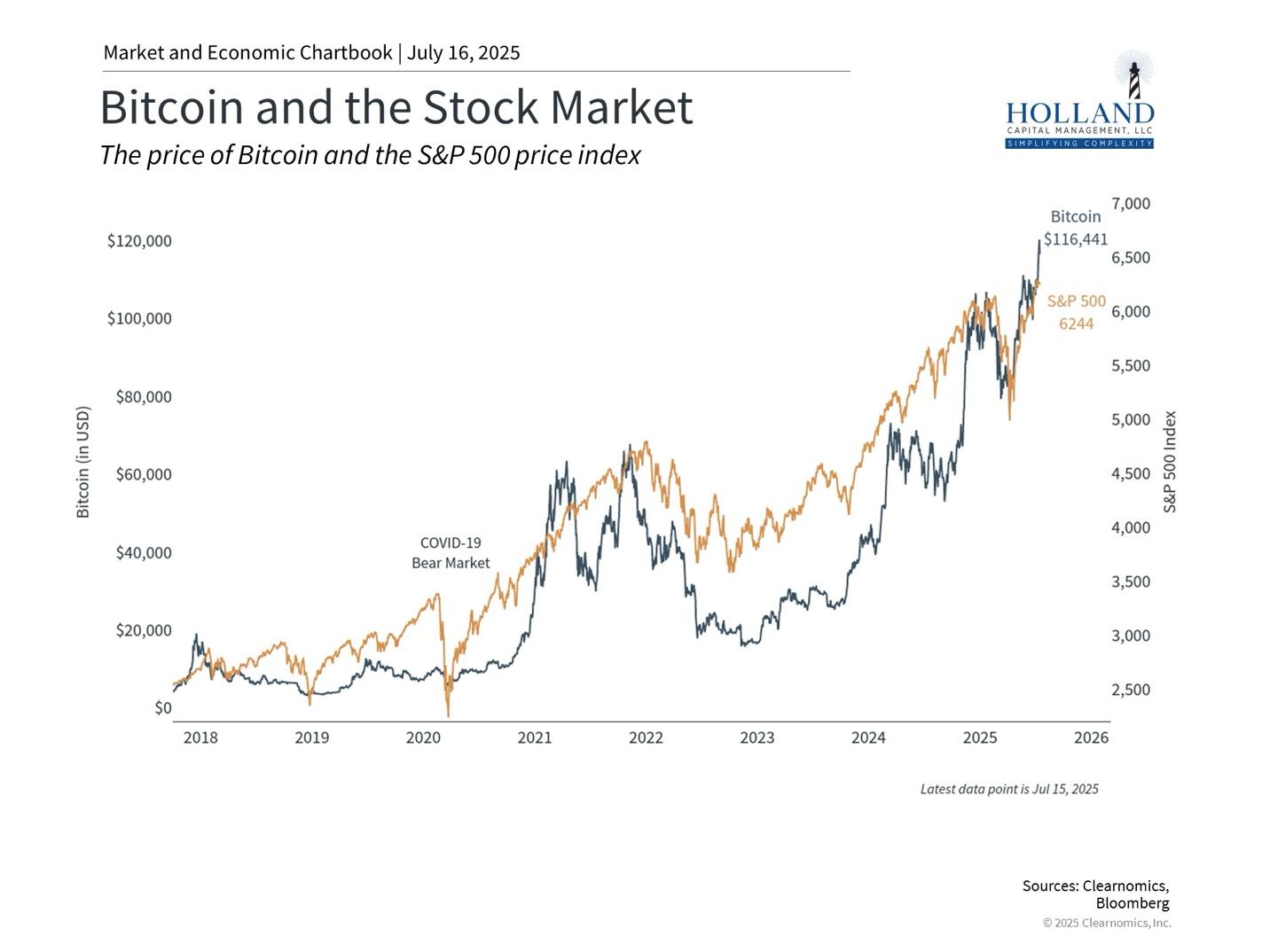
Bitcoin is once again at the center of financial media coverage, with prices rallying in response to legislation, the introduction of new ETFs, and a renewed wave of institutional enthusiasm. Some frame it as the future of finance, while others see it as a legitimate asset class worth including in a portfolio.
We disagree.
Despite its technological innovation, Bitcoin remains a speculative instrument. It does not produce cash flow and lacks intrinsic value. Its price isn’t based on fundamentals but on momentum, hype, and sentiment. The reasons behind its movements are rarely linked to earnings or productivity. Instead, its valuation fluctuates based on legislative rumors, media cycles, and behavioral triggers, none of which investors or advisors can control.
During market stress, the risks tied to Bitcoin become even greater. During the 2022 bear market, the S&P 500 declined by approximately 25%, while Bitcoin dropped by more than 75%. Such a loss isn’t just a dip. It’s a collapse. Although the rebound has drawn new attention, volatility remains high. Even small allocations carry outsized risk.
We do not include Bitcoin in client portfolios. It doesn’t support long-term financial goals, cannot be reliably modeled or projected, and doesn’t generate income. In short, it’s like a lottery ticket, packed with a flashy wrapper but built on a shaky foundation.
Should You Invest in Copper for Diversification?
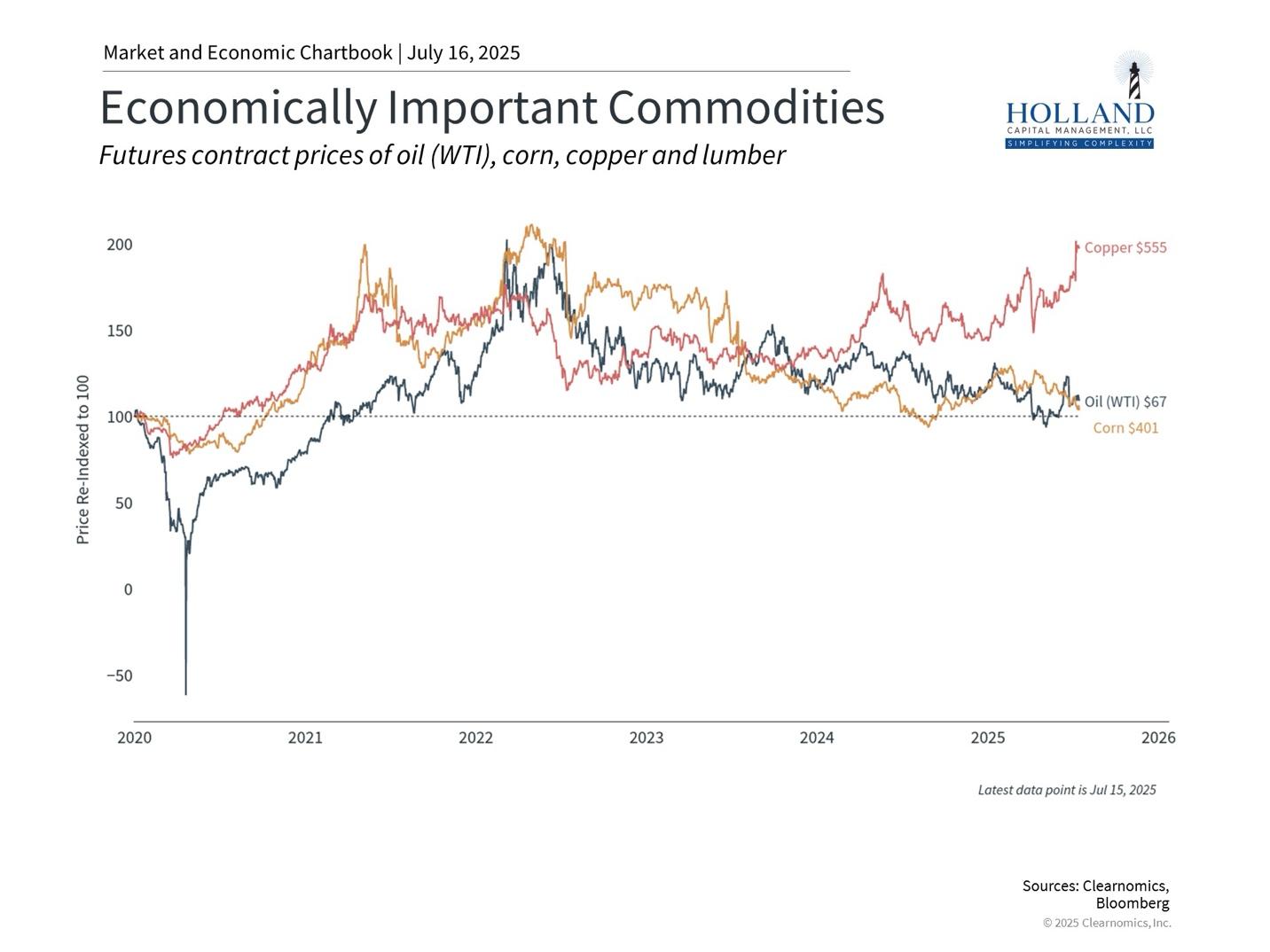
Copper is vital to the global economy. It’s used across nearly every industry: power generation, EV batteries, infrastructure, electronics, and construction. It’s a tangible commodity with real demand. As a result, some investors view copper exposure as a means to diversify their portfolios or as an indicator of economic growth.
And while copper does reflect economic activity, that doesn’t mean it’s a wise investment.
Copper prices are highly volatile and are affected by unpredictable external factors, including tariff disputes, labor strikes, mine shutdowns, weather disruptions, and international trade tensions. Copper doesn’t generate income; it doesn’t pay dividends or interest. Holding it directly, or through futures contracts or ETFs, can come with high fees, tracking errors, and tax disadvantages.
In short, copper is essential, but that doesn’t necessarily mean it belongs in a portfolio. We prefer gaining exposure to industrial growth and infrastructure demand through operating companies: businesses that generate earnings and pay cash flow to shareholders.
That approach aligns with our philosophy: own assets that work for you. Copper doesn’t do that.
Are Gold and Silver Safe Investments Today?
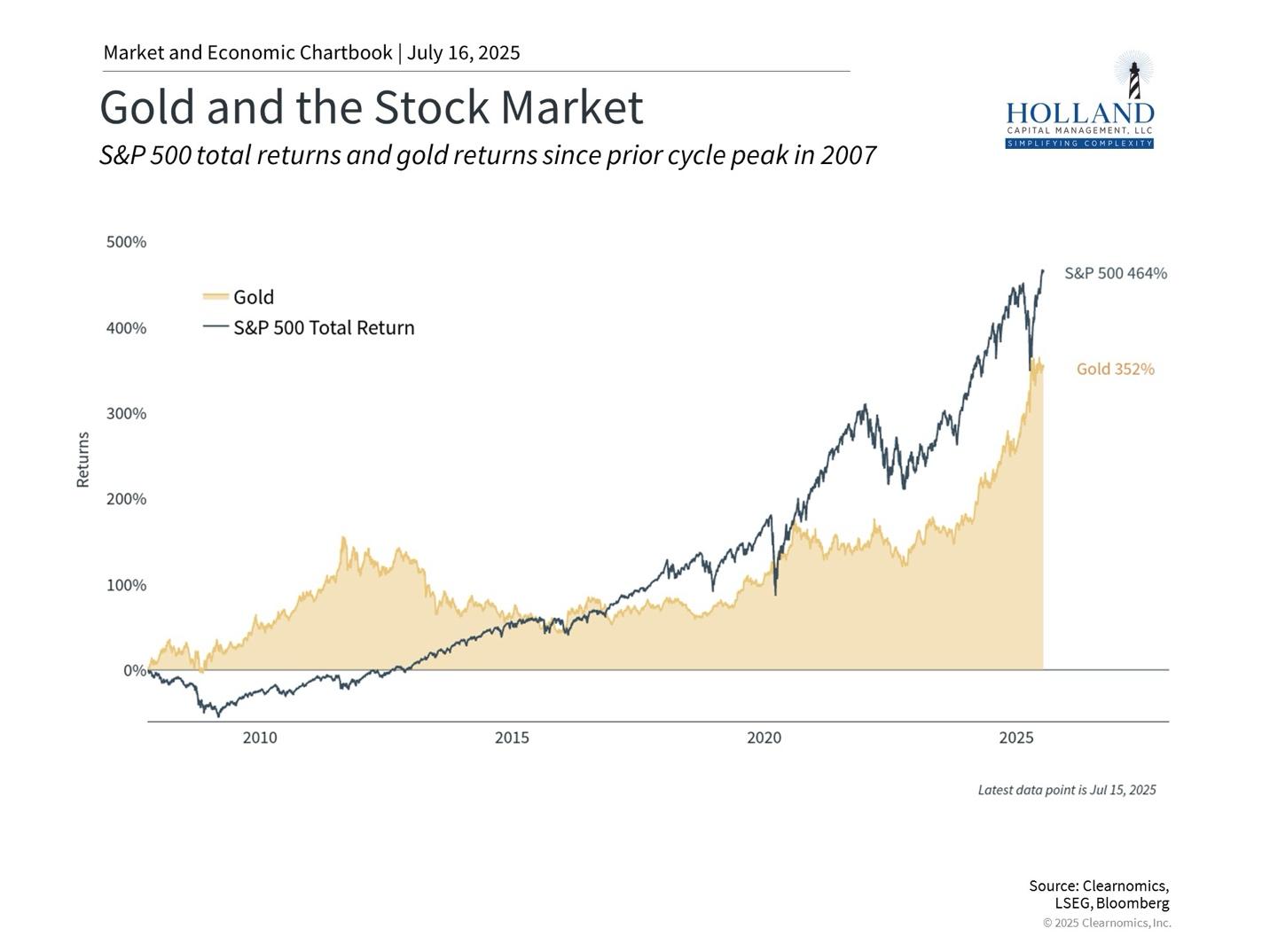
Gold and silver have long been seen as a hedge against inflation, currency devaluation, or systemic risk. However, much of that reputation relies more on emotion than on solid evidence. While these metals may withstand market stress, they also experience extended periods of poor performance. Gold does not pay dividends. Silver does not generate earnings. They are “assets” in the broadest sense, held purely on the hope that someone else will pay more later. That’s not investing. That’s speculation dressed up as investing with a history lesson attached.
We do not include gold or silver in portfolios. These assets fail every key test of inclusion: they don’t produce income, they don’t support goal-based planning, and they don’t offer consistent diversification benefits over time.
Owning gold to “play defense” is like building a moat around a rental property that doesn’t generate rent. It might make you feel safer, but it won’t help you grow.
What’s the Difference Between Productive Assets and Speculation?
A productive asset creates real economic value. This could be a business that earns profits, a bond that pays interest, or a pooled investment vehicle that distributes income. These assets form the foundation of any solid portfolio.
In contrast, speculative assets are driven by sentiment. They may have cultural significance, scarcity, or momentum, but they lack measurable financial output. Bitcoin, copper, gold, silver, meme stocks, and collectibles all fall into this category. There is no cash flow, no clear valuation model, and no guarantee of long-term return.
Productive assets aid in planning. Speculative assets make it more complicated. When your goal is financial independence, simplicity and predictability are more important than hype.
Why Chasing Trends Often Backfires in Investing
Every cycle has its favorite story. Tech in the late ’90s. Real estate in the mid-2000s. Crypto and meme stocks have been in the news in recent years. The details change, but the outcome is often the same.
Initial excitement generates media attention, which in turn attracts retail investors. Prices spike. More attention follows. Eventually, the narrative loses momentum, liquidity dries up, and the downswing begins.
We’ve seen this too many times to consider it a coincidence. It’s behavioral finance playing out in real time.
At Holland Capital Management, we advise clients to ask a different set of questions: Does this investment align with my long-term goals? Does it generate income? Can it be valued? If the answer is no, we move on.
Chasing trends may feel exciting, but that’s not what leads to security, legacy, or freedom.
Bottom Line: What Investors Should Know
Assets you own should serve a purpose. They should help you achieve retirement goals, fund education, support charitable giving, or generate future income. If they don’t do that, if they’re merely a gamble, they have no place in your portfolio.
Bitcoin, copper, and precious metals might be in the headlines, but they are not productive assets. They do not produce income or create value in a way that supports long-term planning. That’s why we don’t recommend them.
We build portfolios based on clarity, not chaos: planning, not prediction. Cash flow, not hope.
Frequently Asked Questions
Do fiduciary advisors recommend crypto?
Most fiduciaries do not. Crypto lacks intrinsic value and introduces volatility without supporting a defined financial plan. It’s incompatible with a goals-based investment strategy.
Is gold still a hedge against inflation?
Historically, gold has been regarded as a hedge against inflation; however, its performance has been inconsistent. It provides no income and can underperform for long periods, even during inflationary periods.
What’s the safest way to invest in commodities?
We generally avoid direct commodity exposure. When appropriate, we employ diversified equity strategies that benefit from commodity-related demand, without the complexity or unpredictability associated with the raw materials market.
Do you invest in real estate?
We do not own direct real estate. When suitable, we may invest in publicly traded real estate securities (e.g., REITs) that offer liquidity and transparency; however, we avoid investing in physical assets due to a lack of control and the unpredictability of income.
What type of investments do you recommend?
We suggest investments that generate income, can be valued, and support a written financial plan. This typically includes equities, fixed income, and certain alternative investments that align with long-term objectives.

