


Recent developments in the Middle East have pushed oil prices and US fuel prices sharply higher. Disruptions affecting shipping through the Strait of Hormuz have driven both Brent crude and West Texas Intermediate from roughly $70 per barrel to around $100 in just a matter of days. This sudden move has placed oil prices back above $100 in the headlines. These levels are similar to those seen in early 2022 during the Russia‑Ukraine conflict. Headlines have quickly raised concerns about inflation, economic slowdown, and the possibility of stagflation.
While geopolitical conflicts always carry far greater humanitarian consequences, they also raise important questions about oil prices and the economy, particularly how rising energy costs and higher prices might affect households, businesses, and financial markets.
History offers a useful perspective during periods like this. Energy price shocks have occurred many times over the past several decades. While each event has different causes, the pattern is familiar: oil prices surge, market volatility increases, and eventually supply and demand adjust.
This perspective reflects our broader investment philosophy, which emphasizes maintaining disciplined portfolios through market cycles rather than reacting to short-term headlines.

When markets get volatile, clarity matters.
Download our educational guide, How to Protect Your Wealth in Challenging Markets.
Why Oil Has Climbed Toward $100
For investors, energy prices are among the primary ways in which geopolitical events affect the global economy. The epicenter of the current disruption is the Strait of Hormuz, a narrow waterway connecting the Persian Gulf to international shipping lanes.
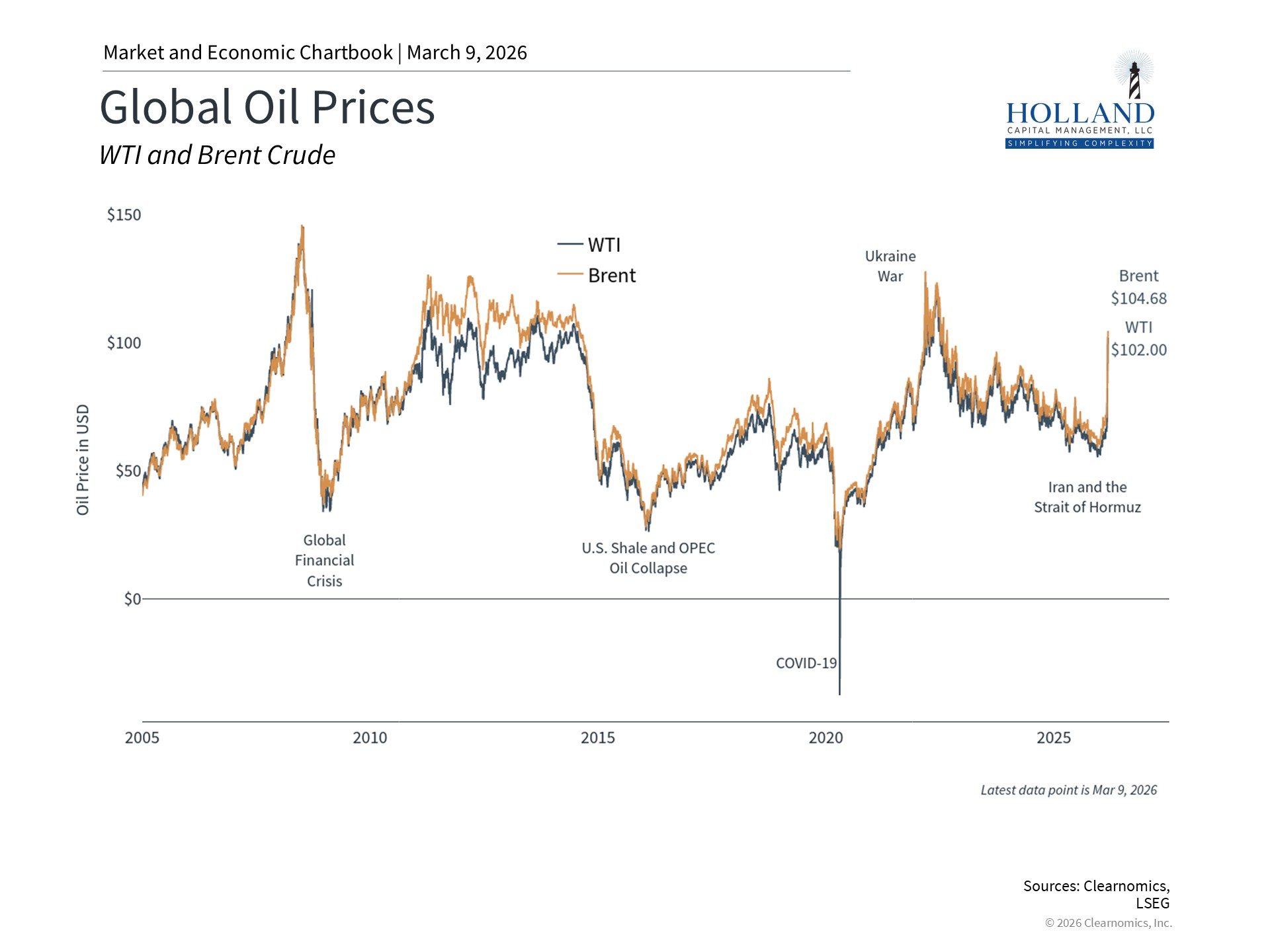
Roughly 20% of the global oil supply moves through this region each year. Even temporary disruptions to oil shipments through the Strait of Hormuz can significantly affect global markets. In the current situation, security risks and tanker attacks have disrupted shipping. Major logistics companies have suspended bookings through the region, contributing to a global oil supply disruption. This type of disruption creates what economists describe as an oil market supply shock. When oil transportation slows or stops, producers must store crude domestically while markets react to tighter supply.
Historically, when oil prices surge above $100 per barrel, investors often worry about the broader economy. However, energy markets have experienced similar oil price spikes many times before. During the Russia‑Ukraine conflict in 2022, oil briefly climbed to $128 per barrel. Earlier in the mid‑2000s, strong global economic growth also drove oil prices to record highs. In each case, markets eventually adjusted as supply increased and demand adapted.
How Higher Oil Prices Affect Consumers and Businesses
The United States is in a stronger position today than during previous oil crises. Thanks to the shale revolution, the U.S. is now the world’s largest producer of oil, natural gas, and petroleum products. This increased energy independence provides an important economic buffer.
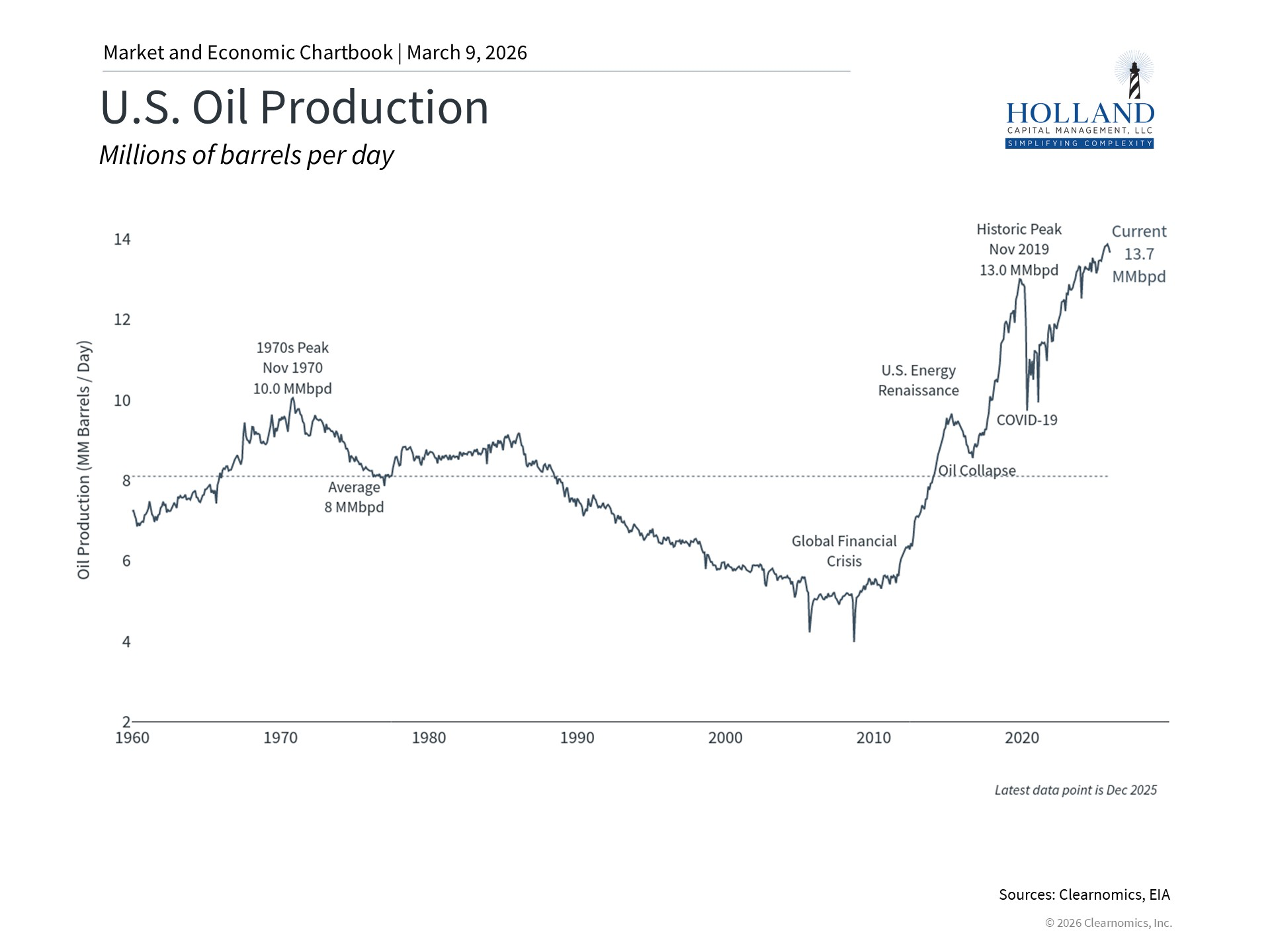
Even so, higher oil prices still ripple throughout the economy. The most visible impact is at the gasoline pump, where rising fuel costs affect household budgets. These types of pressures are often addressed through thoughtful financial planning that accounts for inflation, economic cycles, and long-term goals.
Energy prices also influence the cost of transporting goods, manufacturing products, and operating businesses. This relationship between energy prices and inflation is often described as cost‑push inflation. When energy costs rise quickly, businesses face higher input costs that eventually pass through to consumers. As a result, energy prices and inflation pressures often move together. Fortunately, supply shocks are often temporary. As production increases and demand adapts, markets typically stabilize.
Financial Markets Can Weather Energy Shocks
Energy price spikes often create short‑term market volatility, but financial markets, including those influenced by central banks, have historically adapted. While the S&P 500 has declined modestly this year, some international markets have experienced larger swings. For example, South Korea’s KOSPI index has fallen roughly 17% since February, while Japan’s Nikkei index has declined about 10%.
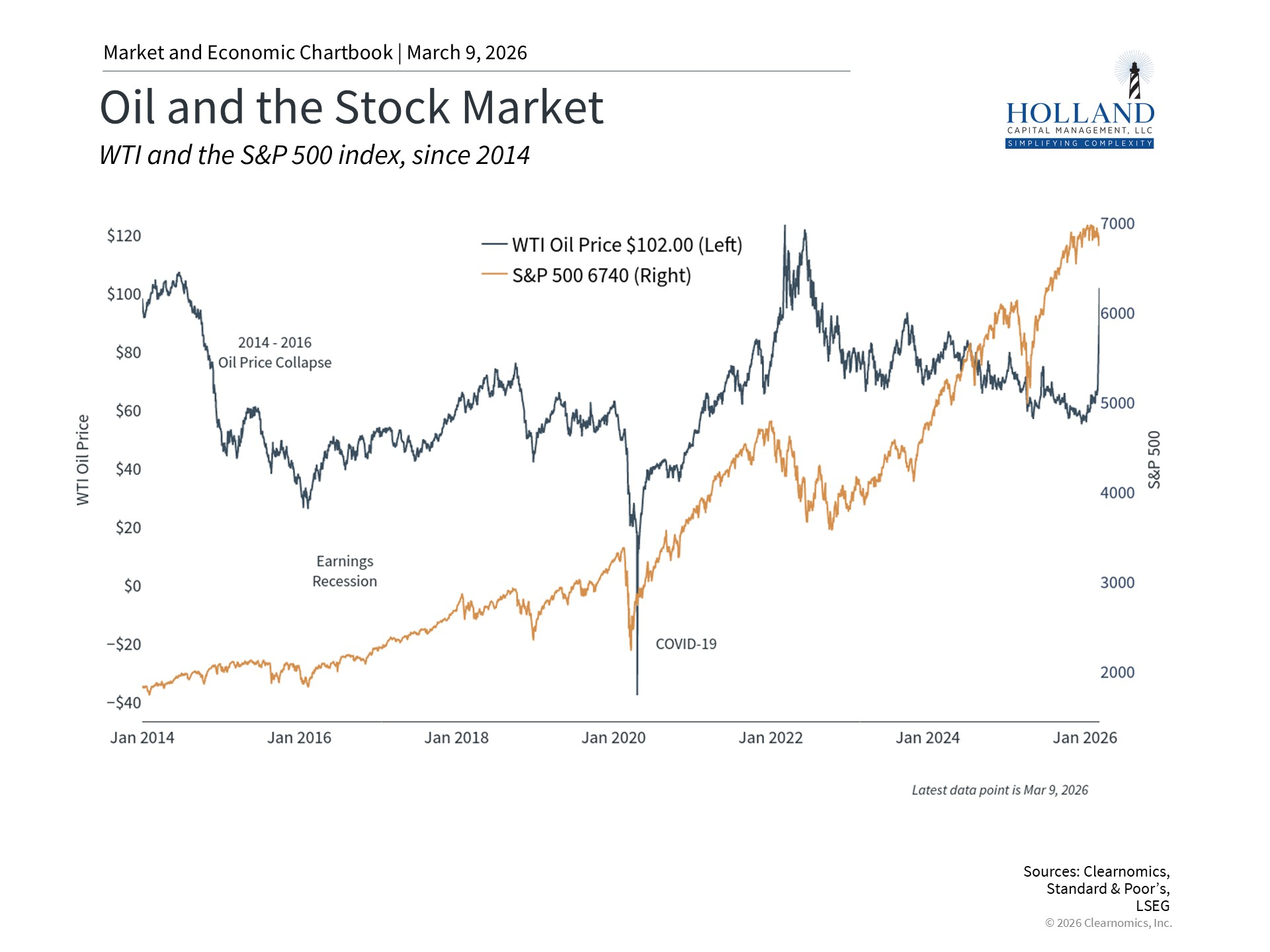
At the same time, energy sector stocks and commodities have performed strongly during this period. The energy sector has risen significantly this year, while commodities have also gained ground. These dynamics highlight the importance of diversification within long‑term portfolios.
Historically, energy sector stocks, commodities, and inflation trends often move together during periods of rising oil prices. Investors are also watching how higher oil prices could influence Federal Reserve policy if inflation pressures rise.
Maintaining Perspective During Market Uncertainty
Periods of geopolitical tension can create uncertainty for investors. Markets rarely move in straight lines, and short‑term headlines often exaggerate risks.
This is why well‑constructed portfolios rely on asset allocation, diversification, and long‑term planning. Geopolitical conflicts, inflation shocks, and energy disruptions have occurred many times throughout history. While each situation is unique, reacting emotionally to market headlines has rarely improved investment outcomes.
Disciplined investors remain focused on long‑term financial goals rather than short‑term market noise.
The Bottom Line
The recent oil price spike, which pushed oil above $100, reflects a temporary supply shock tied to disruptions in the Strait of Hormuz. While higher energy prices may create short‑term volatility and inflation concerns, history shows that financial markets eventually adapt.
For long‑term investors, maintaining diversified portfolios and disciplined financial plans remains the most effective strategy. This is particularly important when building sustainable retirement planning strategies that can withstand market volatility. Staying grounded in the plan remains the most reliable path through uncertain markets.
Getting Started with Holland Capital Management
If you’re evaluating financial decisions in today’s market environment, request a Clarity Call to discuss our planning and investment approach.
Frequently Asked Questions
What Drives Crude OIL Prices?
Crude oil prices are driven by several factors, including supply and demand dynamics, geopolitical tensions, currency fluctuations, and natural disasters.
Additionally, OPEC’s production decisions and global economic health play crucial roles in influencing lower oil prices. Understanding these elements is essential for investors navigating the market.
Why are oil prices rising so quickly?
Oil prices have surged due to disruptions affecting Strait of Hormuz oil shipments, which handle roughly 20% of global oil supply.
Do higher oil prices cause inflation?
Yes. Higher energy prices increase transportation and production costs, contributing to inflation.
How do oil price spikes affect the stock market?
Energy sector stocks often benefit from higher oil prices, while other sectors may face higher costs.
Should investors change portfolios during oil shocks?
Historically, reacting to geopolitical events has not improved investment outcomes. Maintaining long‑term investment discipline has been more effective.
